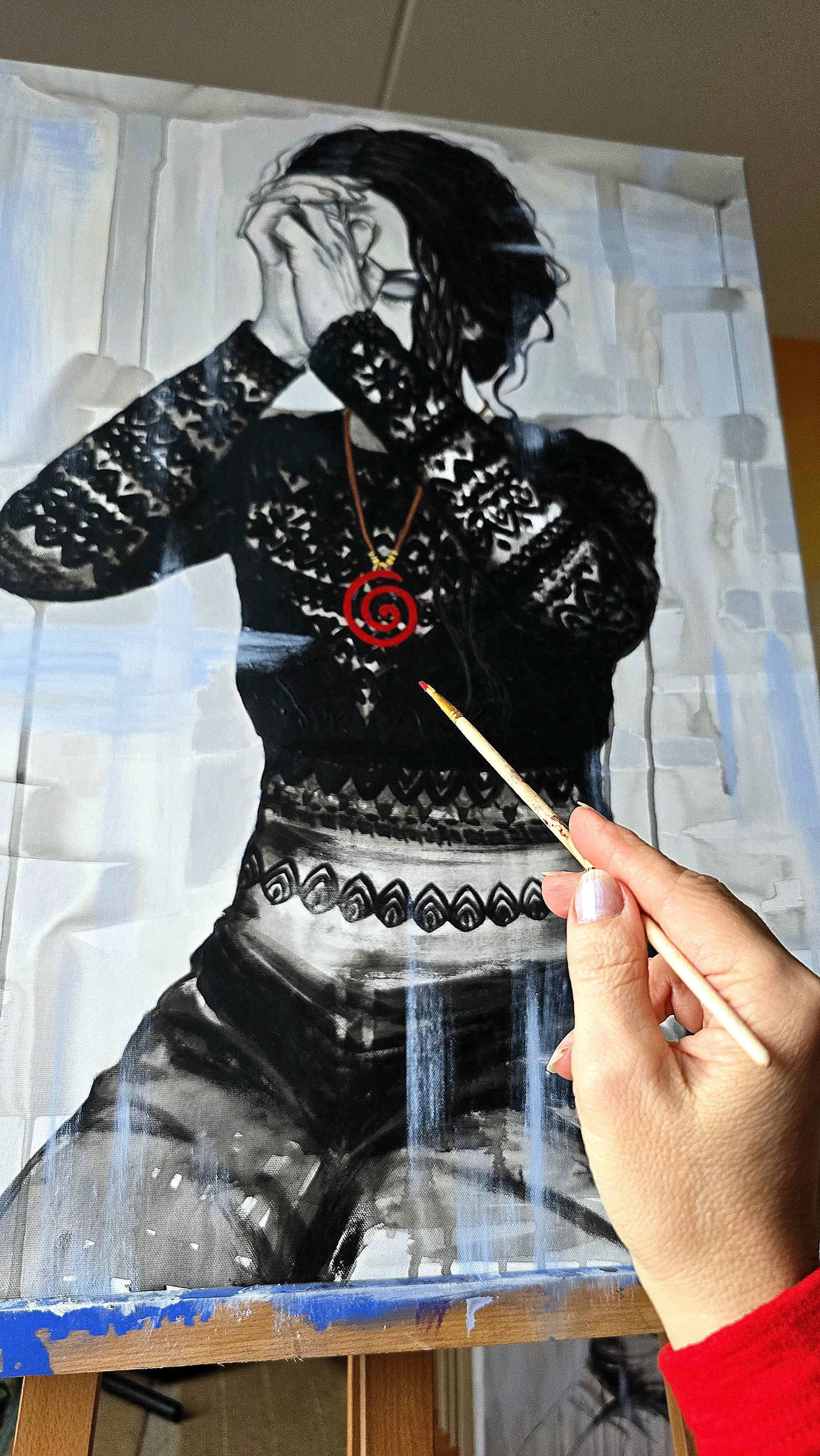
The Spiral of Generations
Inherited Patterns, Awakening and Liberation
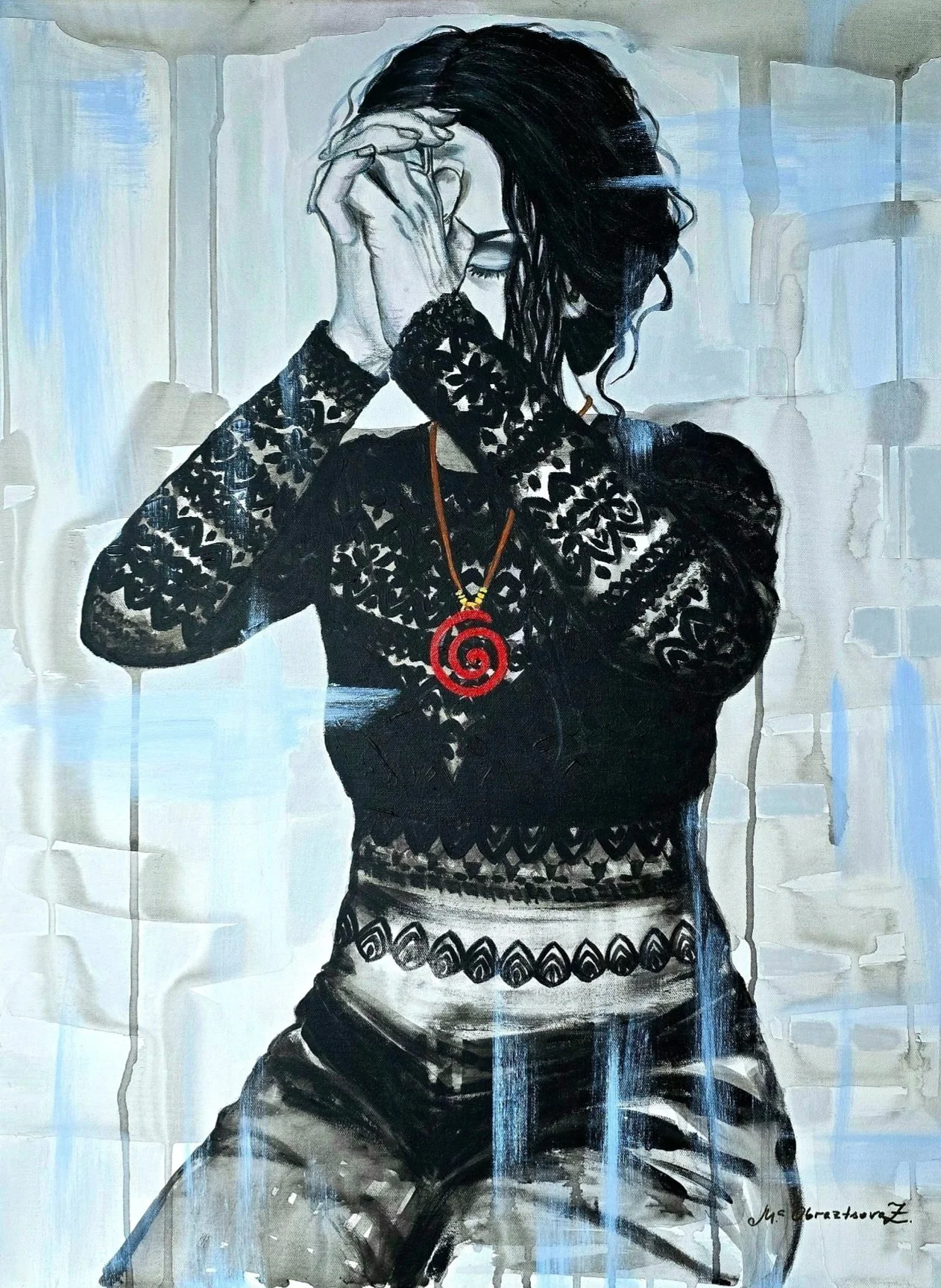
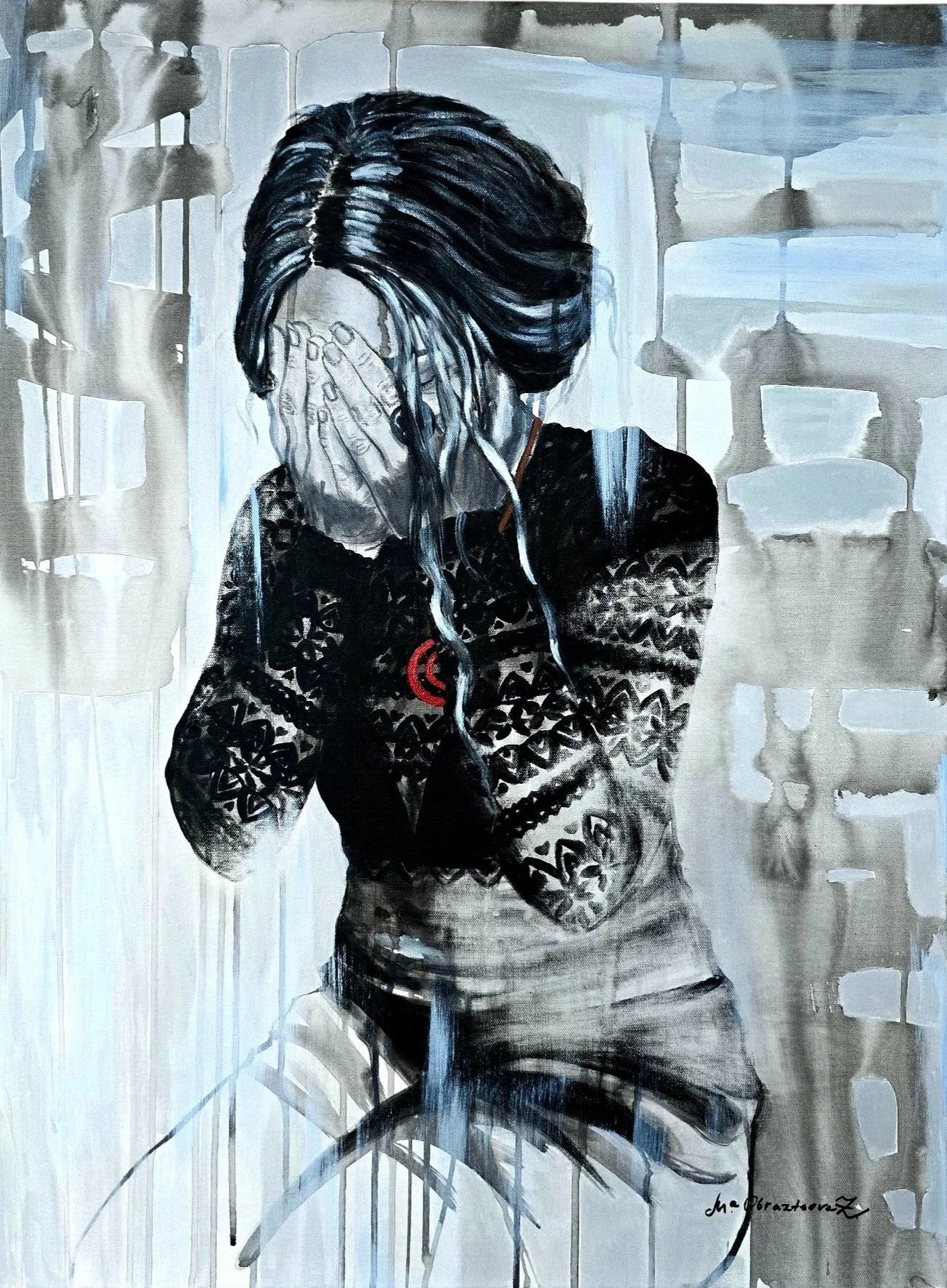
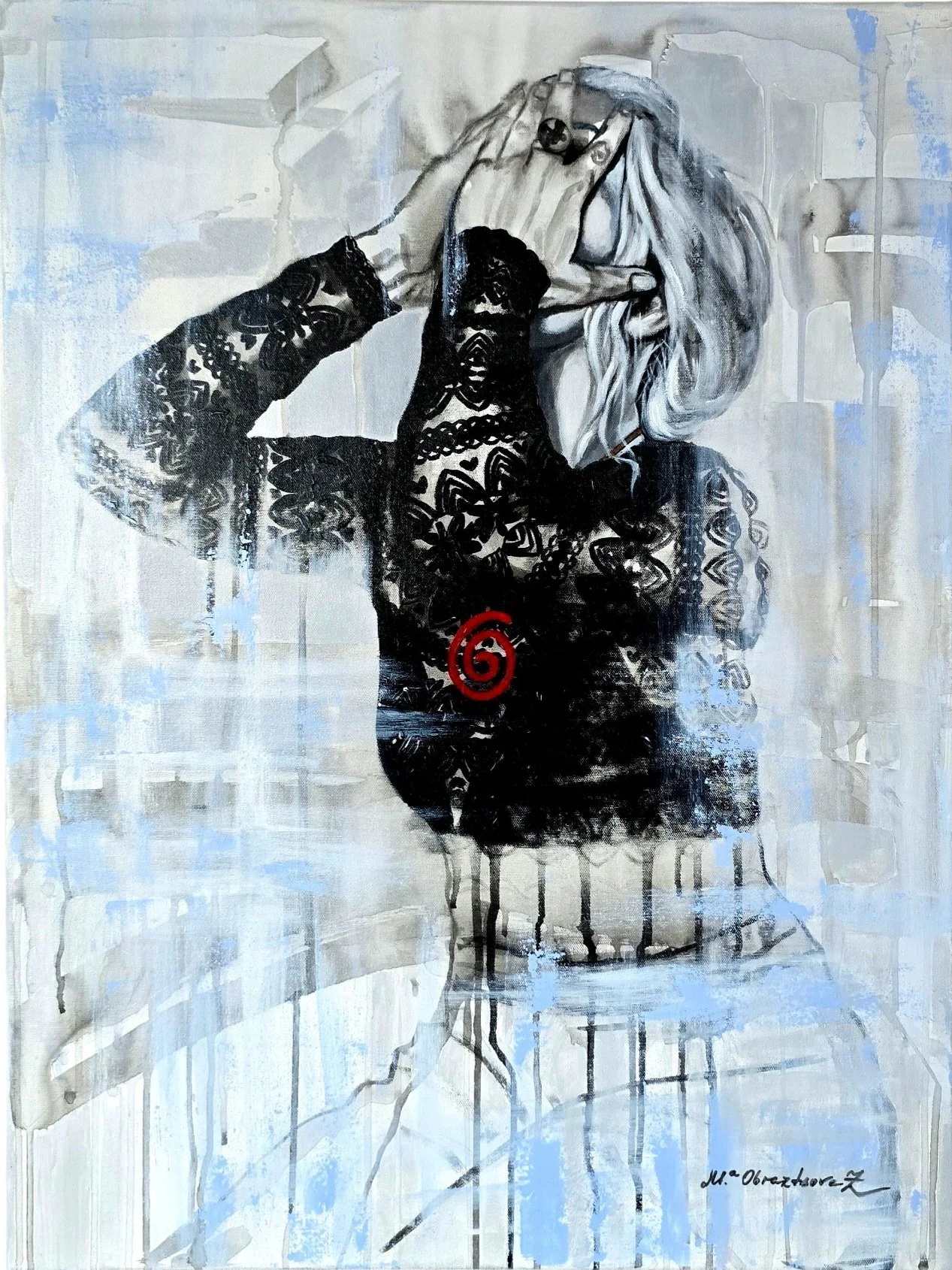
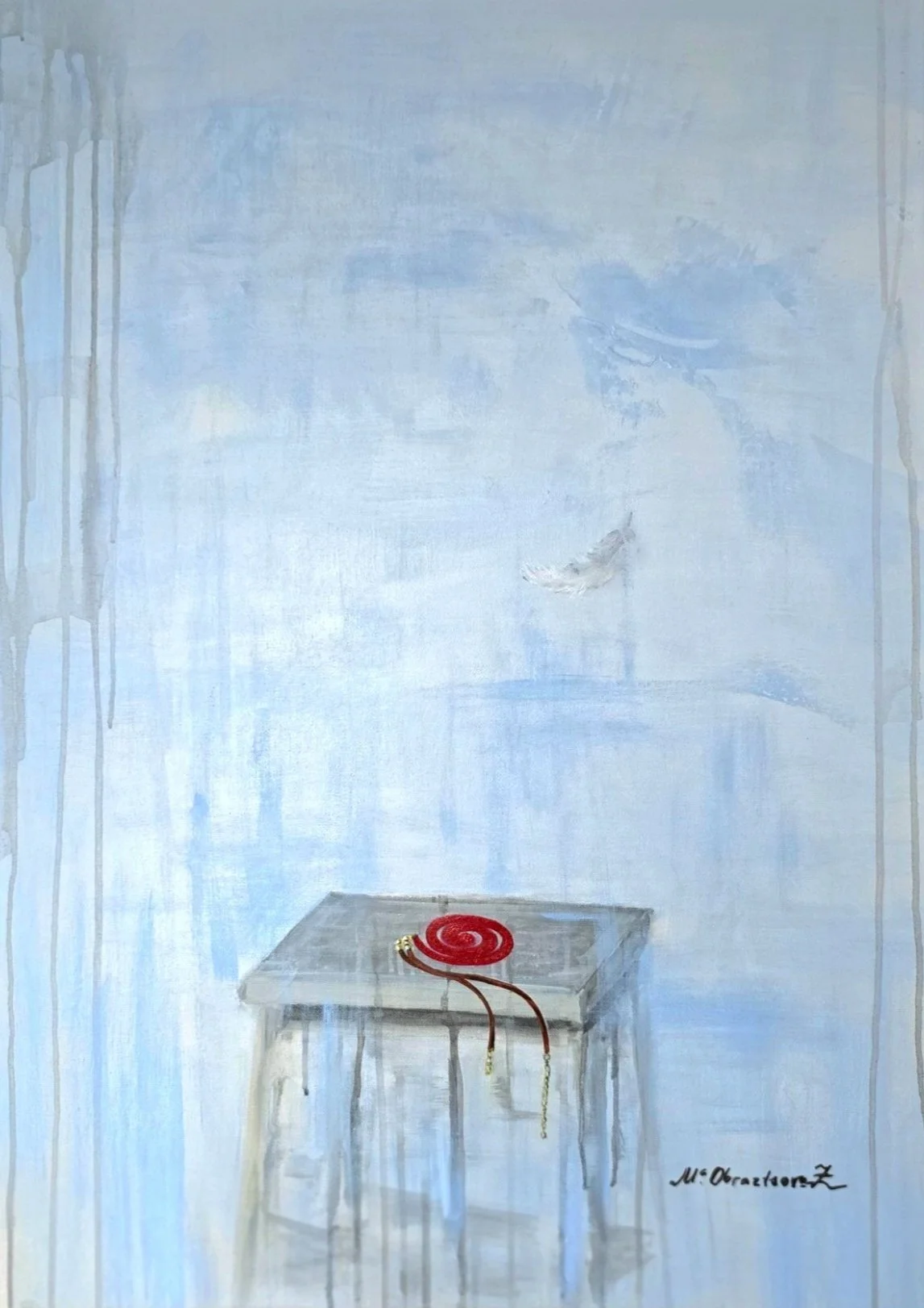
The Spiral of Generations is an ongoing series exploring the transmission of restrictive beliefs and emotional patterns across generations of women.
For centuries, patriarchal social and cultural structures have influenced women's identities, opportunities, and relationships. Expectations of obedience, self-sacrifice, dependence, and conformity have often been transmitted through families and communities, becoming internalised even when their origins are no longer consciously recognised.
Maria translates these invisible processes into a visual language of recurring symbols, colour, texture, and the gradual dissolution of form.
The central symbol is a red spiral, representing blood, ancestry, and the continuity of generations. It evokes the connection between mothers, daughters, and grandmothers, as well as the repetitive nature of inherited psychological patterns.
The spiral is both a bond and a constraint. Yet it also contains the possibility of change: repetition does not necessarily mean permanence.
The predominantly grey atmosphere, marked by vertical drips and dense, sometimes cage-like structures, represents psychological confinement and the weight of inherited expectations.
Gradually, blue begins to penetrate this environment. Initially subtle, it becomes increasingly present, interrupting and dissolving the oppressive grey forms.
Blue represents air, awareness, openness, and the emergence of freedom.
Across the first four paintings, a female figure undergoes a progressive transformation.
In the beginning, she remains visibly confined within the psychological structures surrounding her. As awareness grows, her physical presence becomes increasingly fragile. Her contours soften, her form begins to dissolve, and the oppressive atmosphere gradually loses its dominance.
In the fourth painting, the woman has disappeared.
Yet this disappearance does not signify death or defeat.
What disappears is not the woman herself, but the identity imposed upon her.
An empty stool remains, its rigid geometry also beginning to dissolve. The red spiral lies abandoned upon it, no longer encircling the woman's neck.
Above, a delicate feather appears almost suspended in the atmosphere — a subtle indication that transformation has taken place.
The blue space becomes increasingly open and luminous. Its more structured movements near the bottom of the canvas gradually give way to softer, less defined forms above, suggesting a transition from resistance and struggle towards openness and release.
The feather becomes a quiet symbol of liberation, anticipating another transformation explored in the artist's developing series, Woman–Bird.
The first four paintings form a complete visual sequence within an ongoing project that will continue to evolve.
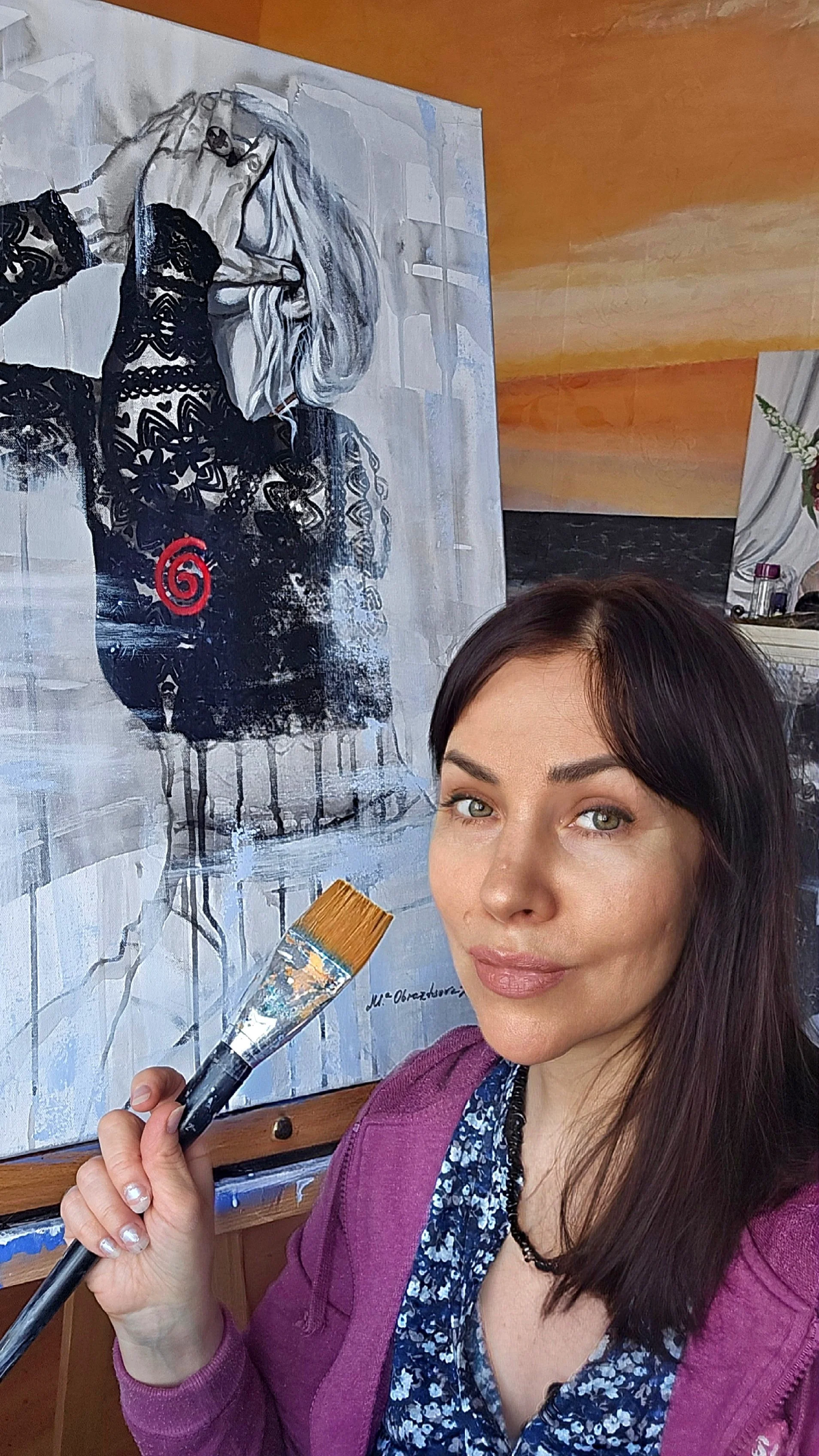
Working on “Spiral” in my studio